
DigiLAB General Article & Blog
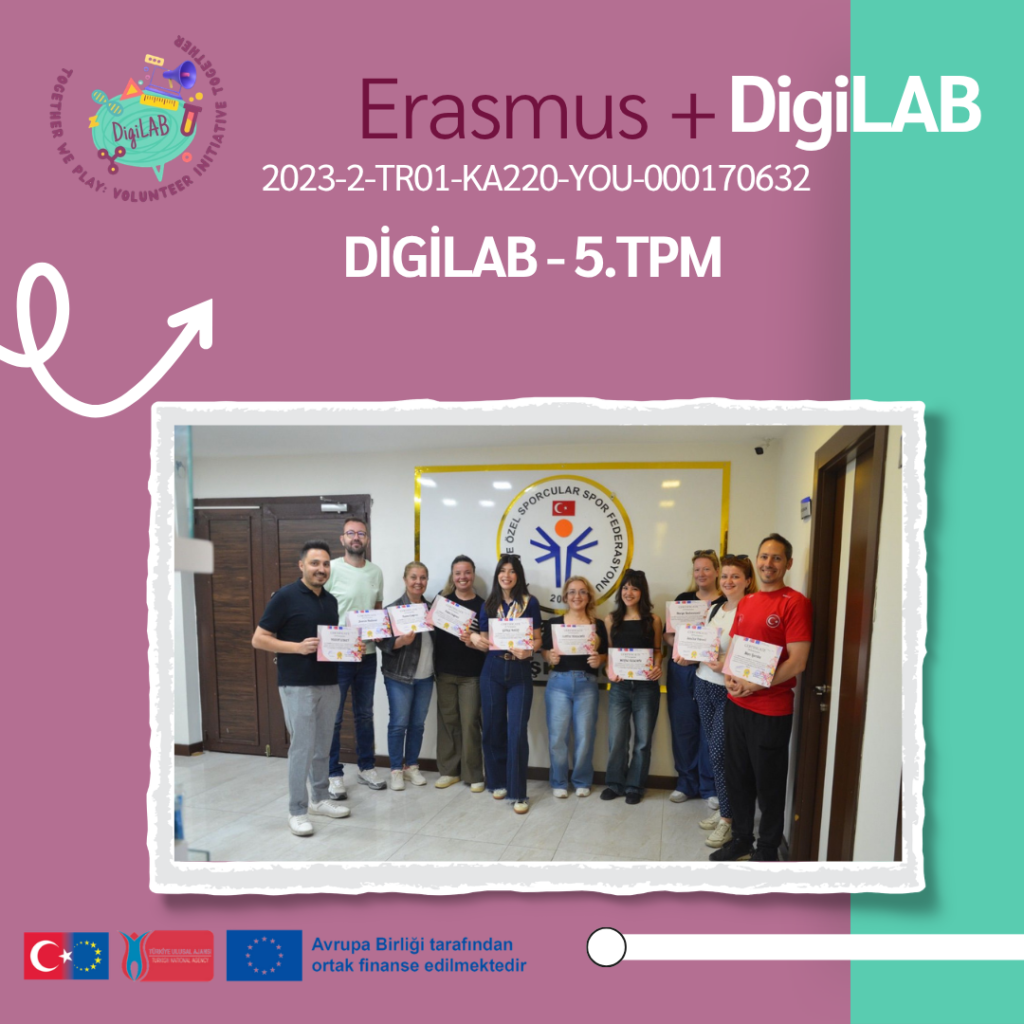
The 5th Transnational Project Meeting of the “Together We Play: Volunteer Initiative” project, which is coordinated by the Turkish Special Olympics Sports Federation (TÖSSFED) and supported by the European Union Erasmus+ Program, was successfully held in Ankara between May 12-13, 2026. The meeting brought together project partners from Türkiye, Bulgaria, Spain, and Serbia to evaluate […]

Sports play a crucial role in children’s development by supporting physical health, strengthening social skills, and building self-confidence. For children with special needs, however, participation in sports activities often requires additional support, understanding, and guidance. In this process, families frequently play the most significant role. Parents and caregivers are often the first individuals who introduce […]
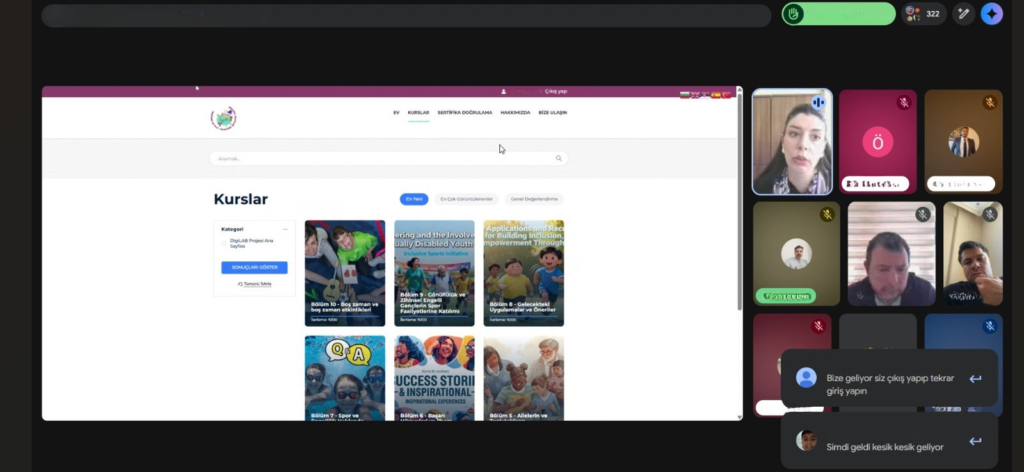
Federasyonumuz koordinasyonunda yürütülen ve Avrupa Birliği tarafından desteklenen Erasmus+ DigiLAB Projesi kapsamında düzenlenen “DigiLAB E-Öğrenme Platformu Tanıtım ve Bilgilendirme Toplantısı” yoğun katılımla başarıyla gerçekleştirildi. Çevrimiçi olarak gerçekleştirilen toplantıya Türkiye’nin farklı illerinden 350’nin üzerinde antrenör, spor eğitmeni ve spor paydaşı katılım sağladı. Program kapsamında katılımcılara, proje çerçevesinde geliştirilen DigiLAB E-Öğrenme Platformunun kullanım süreçleri, eğitim içerikleri ve […]

Building inclusive, equitable, and sustainable societies requires the active participation of all individuals in social life. However, people with special needs often face multiple barriers in areas such as education, employment, social participation, and cultural activities. These barriers are not only physical but also social, cultural, and psychological in nature. In this context, sports emerge […]

Sports are powerful tools that bring people together and encourage equal participation in society. However, sports activities are not always accessible to everyone. Physical, social, and communication barriers may limit the participation of individuals with special needs, particularly in structured sports environments. In recent years, an approach known as inclusive sports has gained increasing attention […]
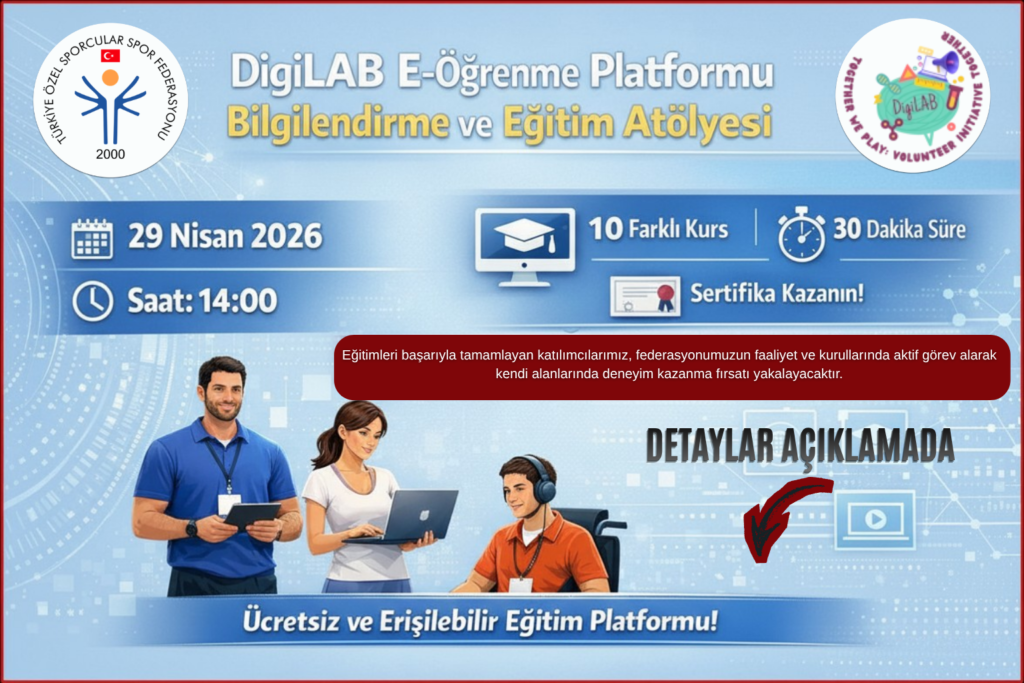
In order to introduce the DigiLAB E-Learning Platform, developed within the scope of our Erasmus+ project supported by the European Union and carried out under the coordination of our Federation, a short information and training workshop will be organized. 📅 Date: April 29, 2026🕒 Time: 14:00 The DigiLAB platform is a free and accessible digital […]

Beyond Sports: How Do Inclusive Sports Programs Transform Society? Sports are often associated with physical activity, competition, and entertainment. However, in recent years it has increasingly been recognized that sports are not limited to individual health and performance; they can also serve as a powerful tool for social transformation. Inclusive sports programs, in particular, represent […]

One of the most important yet sometimes overlooked elements behind successful inclusive sports programs is the presence of volunteers. Volunteers who take part in sports activities, events, and training programs contribute not only to the organization of these initiatives but also to the development of a truly inclusive sports culture. In projects that aim to […]
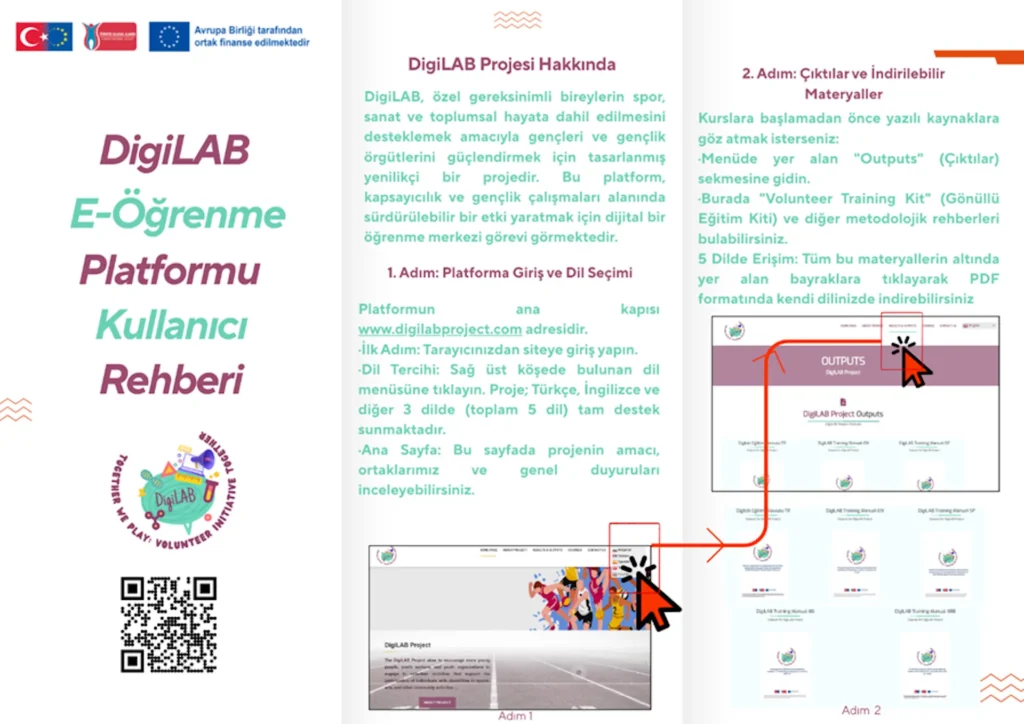
The training contents developed through the DigiLAB E-Learning Platform within the scope of the “Together We Play: Volunteer Initiative” (2023-2-TR01-KA220-YOU-000170632) project, coordinated by our Federation, have been opened for user access. Within the scope of the project, comprehensive digital training resources have been developed for young people, youth workers, and volunteers in order to support […]
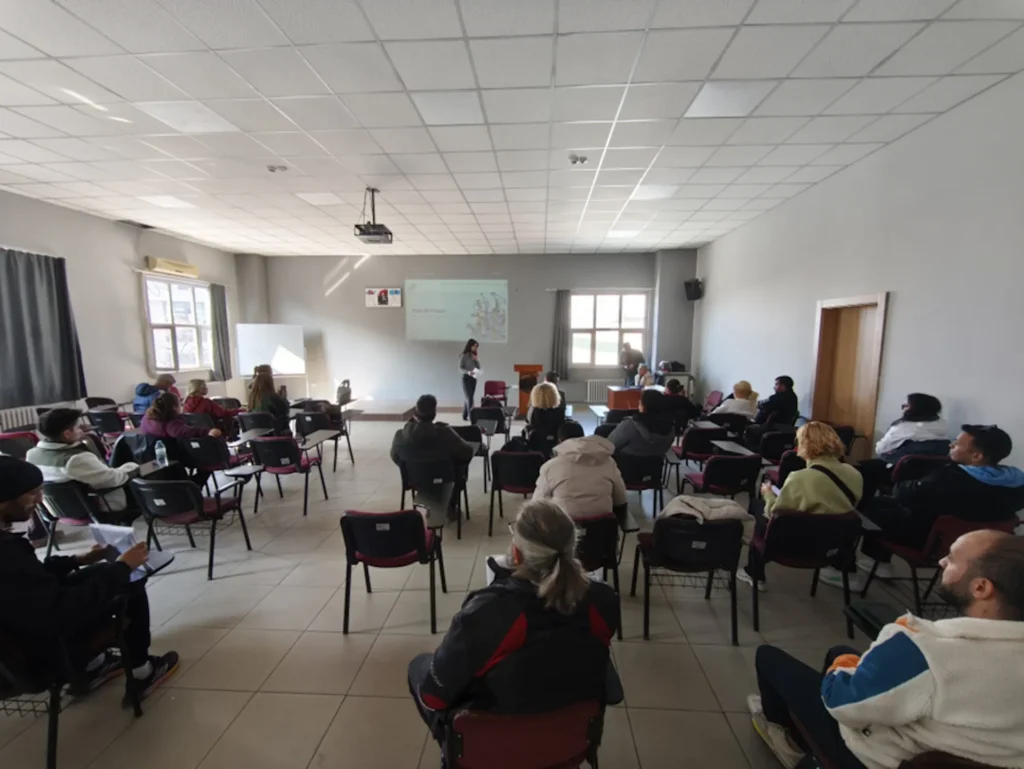
Within the scope of the Athletics Coaching Course organized by the Turkish Federation of Sports for the Special Athletes, an important information and introduction activity was carried out for coach candidates. During the training held at the Gazi University Faculty of Sport Sciences, sports experts and coach candidates participating in the course were introduced to […]


 © 2026 | DigiLAB Project
